
• Skip to primary navigation
  • Skip to main content
  • Home
  • About
    • Recent Projects
  • Services
    • Mediation
    • Facilitation
    • Dispute System Design
    • Thought Partnering
    • Research Services
  • Workshops
  • Blog – Travels with a Triangle
  • Contact

Blog – Travels with a Triangle

Thinking differently about conflict – beginning our travels with a triangle.

November 25, 2014

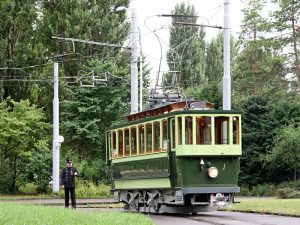
Tram-museum_zuerich_zos_ce2Getting more people on public transport makes it more cost effective and sustainable. If the goal is more people using buses, trams and trains the first step has to be finding out why people aren’t using them. Once we know people’s reasons, how we respond to them determines what happens next.

Paul Mees, a passionate advocate for public transport, was interviewed in 2011 on The Law Report on ABC Radio National. He explained that a few years ago Zurich experienced a downturn in public transport use, particularly at night. People in Zurich, Mees said ‘…began to complain that they felt unsafe on trains at night, largely because of antisocial behaviour, not because of actual crimes.’

In his interview Mees went on to say that in places like Australia, the response from public transport officials would most likely be to dismiss people’s feelings and say to them ‘look at the crime figures, you’ve got nothing to worry about.’

Mees described that in Zurich, which had very low crime figures for public transport, the officials took what might be seen as the extraordinary step of actively responding to the people and their feelings and as a result ‘…they put a conductor on every single train throughout the entire state of Zurich after 8pm every day of the year.’

In Zurich they had the wisdom to know that addressing people’s emotional needs was fundamental to getting people to use the public transport system. They could have taken the step of telling people the crime figures and why they were wrong to feel unsafe and then sat back and wondered why more people weren’t using public transport. Instead they saw that to get what they wanted – which was more bums on seats – they had to take seriously the reason why people didn’t want to sit down at all.

Conductors made people feel safe. It didn’t matter that crime figures showed they were already safe whether there were conductors or not. What mattered was if people felt safe they would catch the tram and if they didn’t they wouldn’t.

If we want to solve a problem there are three interdependent needs we have to consider. There is what we want to do. This is the substantive need we want to address. But there are two other vital needs we must grapple with as well. A procedural need or the how of how we go about dealing with what it is we want to do. And an emotional need or the how of how those we are dealing with, feel about matters.

Put very simply when we are solving problems if we haven’t gotten the how right or taken account of how people feel, then most likely the what won’t work. These three needs are represented by a model called the Satisfaction Triangle.

This blog is dedicated to exploring the Satisfaction Triangle, the way it can be used and providing real life examples that illustrate its application. Along the way we will consider El Nino forecasts, rates of sedation of children in MRIs, the cheerfulness of dogs, overseas aid projects that end up replicating previous failures, attitudes to stress and levels of stress and which affects mortality more, why music matters for literacy and numeracy and many other things besides.

So let’s go travelling with a triangle.

If you want to get things done you’re going to have to take seriously how people feel.

November 16, 2014

Post 2

The Satisfaction Triangle holds that people have three interdependent needs that must be considered and addressed if issues are to be truly solved. One side of the triangle represents the substantive needs that people have. It is the what that needs to be solved or resolved. Substantive needs can be material things and issues and can be tangible such as money, time, land, possessions, rights, getting more people on public transport; or intangible such as respect or consideration, s sense of safety.

Triangles as we know have three sides and the Satisfaction Triangle is an equilateral triangle with each side of the same length or ‘importance’. Of the other two sides, one represents the procedural needs people have. It is about how people talk or work together and how they want to talk and work together. It is the how of how people will deal with the what of what they want to deal with. People’s procedural needs include the opportunity to have a ‘fair go’ including the opportunity to put forward their point of view, to listen and be listened to and to having confidence in the fairness, timeliness and integrity of information, protocols and meeting processes.

The other arm of the triangle represents people’s emotional needs. It is about how people feel about the problem, the processes and themselves as they are treated in the process and in response to the issues they raise. It is also how of how people feel about the how and the what they dealing with. Emotional needs are both the emotions people bring to the process about the issues and themselves and those emotions that are generated by the process and the consideration of the issues.

Unless each of these three sides is represented there is no triangle. Accordingly two thirds of what it takes to make something work is not about the what, it is about the how. Simply put if you haven’t gotten the how right chances are that the what won’t work.

In essence if we want to get what we want, we must also recognise and deal with the emotional, procedural and substantive needs that are brought to the table by those we are dealing with and we must treat each of those needs with equal respect and consideration.

Building trust is about building relationship

November 15, 2014

800px-Laura_beach_n_tree_(170671778)It’s all about eyeball to eyeball contact –

you can’t write it in a paper and expect people to believe you;

it’s got to be a human, individual, personal trust relationship.

In 1997 there were growing forecasts of a very severe El Nino drought for Pacific nations in the 1998/1999 summer. A number of countries including the Federated State of Micronesia, the Republic of Palau and the Republic of the Marshalls set up El Nino task forces and insisted that their ministries all worked together to prepare for the drought. The resulting drop in rainfall was one of the most significant El Ninos ever experienced in the Pacific yet the impacts were far less than anyone had anticipated.

One of the key things that lessened the impacts was that careful attention was paid to building relationships between the scientists who forecast El Nino and the people who were being asked to trust and rely on the scientific information.

In one instance forecasters were describing the coming drought whilst standing under a tin roof in pouring rain. People responded to the need to plan for drought because they trusted the forecasters and they trusted them because strong relationships had been built up. As one researcher involved put it, “… it’s eyeball to eyeball contact: you can’t write it in a paper and expect people to believe you; it’s got to be a human, individual, personal trust relationship.”

Let’s apply the Satisfaction Triangle to this situation. Trust is an emotional need. We can be asked to trust someone but ultimately we make a decision as to whether we ‘feel’ we can trust someone. What informs how we feel, is how we have been dealt with. How we feel we have been dealt with, will be dependent on the relationship we have with those we are dealing with. These are things that can be clearly understood as emotional needs on the Satisfaction Triangle.

The scientists working with communities to prepare for the coming El Nino were smart enough to realise that providing scientific information about what was coming simply wasn’t enough. They knew that to get people to plan for drought how they engaged with them was critical to building trust and relationship which in turn was critical to them trusting and acting on the scientific information they were given. The scientists knew that getting the how right gave them the best chance of getting their what listened to.

We tend to focus on what we want to do, prioritise the substantive needs and disregard emotional and procedural needs. Had the scientists done this they would have said ‘ …we just give them the information. What they do with it is up to them.’ They didn’t. They recognised that the information was important enough that they wanted to do everything they could to get people to take it seriously and act on. The scientists went travelling with a triangle.

The Satisfaction Triangle holds that if we want our what; how we approach others holds the key. And that how is both about how we approach the what or the processes we use; and how we take account of how people feel and work to engage with those feelings. We need to always remember that two thirds of getting to a what is in the how of how we do business.

How can pirate ships save our health system?

November 5, 2014

Pediatric Emergency Department, Pirate room CTWhen solving problems our most effective tool is not our technical brilliance, it is our ability to create and sustain relationships. If a technical solution requires any element of human collaboration to make it work or to keep it working, then everything must start from a consideration of the relationships between the humans involved.

David Kelley in his TED talk on creativity tells the story of Doug Dietz a designer of medical imaging equipment or MRI and CT machines.   He begins by explaining that Doug is a highly sought after designer and that his equipment has helped saved many lives. However Doug was devastated one day when visiting one of his machines to find a young family whose little girl was terrified and crying because she was about to be scanned.

Watch the talk here

Doug was shocked to discover that around 80% of kids being scanned in MRIs required sedation, making it a more expensive, more time consuming and, perhaps more importantly, a much riskier procedure. As David tells it ‘…Doug had previously been proud of his work but was hurt to think of kids being hurt.’ As Doug himself says, seeing the frightened child he felt ‘… kind of a failure.’

There was nothing technically wrong with the MRIs – they worked brilliantly – they were just very frightening to the children. Using the Satisfaction Triangle we could say the what was perfect; however as we know two thirds of an answer lies not in the what but in considering the procedural and emotional needs of those we are dealing with.

As David explains Doug was both a smart and a compassionate person.   Using his empathy for the children he was able to change, not the machines, but the children’s experience of them. Doug created scan rooms that are adventures. He used paint, scents, lights and trained the technicians using techniques borrowed from children’s museums. One room became the ocean and the scanner a submarine, in another the scanner was a tent in a camping adventure. He painted up one MRI to look like a pirate ship and the technicians explained that the noise from the machines was the pirates looking for them so it they had to keep still and quiet.

These simple but powerful changes based on empathy for the children’s experience, or consideration of their emotional needs, led to the sedation rate dropping from 80% to 10% – saving hospitals time and money and making procedures much, much safer for the children. But as David explains Doug knew he had it right when he visited one of his machines and heard a very happy and excited little girl saying ‘Mommy can we come back tomorrow?’

We can find it hard to take other people’s emotional needs seriously. We have been taught to believe in facts and answers. But, as the Satisfaction Triangle highlights, facts and answers are substantive in nature and only one third of the equation. Taking seriously people’s emotional needs opens up new ways of seeing and understanding problems and this offers new ways of solving them. When we take these needs, and particularly the emotional and procedural needs, of others seriously we are creating a relationship between us.

There is no doubt Doug Dietz is a brilliant designer but his true brilliance came when he moved beyond his technical expertise and developed the wisdom to listen to and act with empathy for the emotional needs of children. He was definitely travelling with a triangle.

Travels with a triangle goes to the dogs!

October 25, 2014

Lots I know about travelling with a triangle, including refresher lessons, I learnt from dogs. No, seriously! Watch the video above and then I’ll explain.

The dog in this video really, really wants the stick thrown. The dog’s determined desire to have the stick thrown is the what. ‘Throw the stick so I can chase it and bring it back for you’, is clearly this dog’s primary substantive and emotional need.

The dog is hopeful about getting the stick thrown and varies the process. The dog starts by putting the stick at the feet and hopes the ‘person’ will pick it up and throw it. When that doesn’t work, the dog tries to put the stick directly in the hands of the ‘person’ and hopes that will do the trick. The dog tries a number of things: encouraging barks, tail wagging, looking imploringly at the stick and the ‘person’, perhaps in the hope the ‘person’ will get the point. Throughout it all, the dog remains cheerful and determined.

So what can we learn from this? It appears to be pretty simple. What this dog wants, the statue can’t give. Despite the dog’s determination that the statue could throw the stick if only the dog somehow got the stick in the right place; we know the statue will never throw the stick.

The dog has shown us that if we aren’t getting what we want sometimes we need to consider procedural needs. We need to ask ‘are you the right person to deliver my what’; or in this case throw the stick.

Procedural needs including making sure that the right people to solve the problem are at the table together. Two thirds of what it takes to make something work is not about the what, it is about the how. Simply put if you haven’t gotten the how right chances are that the what won’t work. No matter how that dog tries, that stick will never get thrown by that statue. That dog has to get someone who has the capacity to throw a stick to do so.

A critical lesson from the Satisfaction Triangle is that when considering procedural needs we need to ensure that those we are dealing with actually have the capacity to do what we need. If they don’t then we need to find those who do.

Let’s give full credit to the dog for staying cheerful and determined. The dog doesn’t decide to bite the ‘person’ for not throwing the stick. This is perhaps the most important thing we can learn. Mostly when we don’t get what we want we don’t stay cheerful and determined; we get irritable, bad tempered and if we were dogs we would probably bite.

When we don’t get our what or our substantive need met; our focus often moves to being aggrieved about those needs not being met. It is at this point that our need to get our emotional needs met takes over and we try to get the person we are dealing with to take responsibility for our feelings of anger, annoyance, or whatever negative emotion we are experiencing. We have lost sight of our original substantive need and our focus has become our emotional response to their not responding to our substantive need.

We can short-circuit this. We need to ask a procedural question regarding our original substantive need. We have to ask: ‘Am I dealing with the person who can address this need?’ If the answer is no, we need to ask ‘Who is?’ and get them to the table instead. If we don’t, we are just like the dog and asking a statue to throw a stick.

  • Home
  • About
  • Contact
  • Services
  • Workshops
  • Blog
  • Privacy Policy

Copyright © 2026 — Rhian Williams • All rights reserved. • Privacy Policy